

Grace Hopper Celebration Canceled: Where Latinas in Tech Can Go Now
Grace Hopper is canceled. Here's what Latinas in tech can do, and the communities still worth your time.


Mother’s Day is a beautiful day to pay particular respects to our mamis. Mother’s Day in Nicaragua is on May 30th and it is the day that my mami used to call my abuela and gush to her about how much she had learned from her and how grateful she was of her.
However, Mother’s Day for me has forever been marked as a day when I mourn the child I will never birth. So today I honor a particular kind of women, by bearing a bit of my soul to you. Today I will honor those women whose motherhood was stolen from them, taken, or delayed.
I have suffered from infertility issues, my uterus cannot hold pregnancies and this is a hard lesson I learned about myself through experience. I have lost three pregnancies back to back, and the first one hurt the most.
Nobody tells you, once they’ve discovered that your fetus is dead inside of you, that passing it is the most traumatic experience next to the idea of having lost your baby. It was recommended to me that I pass it naturally, if I wanted to try to get pregnant again, because the healing process is faster if your own body deals with your dead fetus. When I began to have contractions, I knew I was in for a terrible experience, and when I flushed it down the toilet I knew I would forever be changed. So like I said, on Mother’s Day, I allow myself to mourn this child I will never birth.
To the child I will never birth,
You would have smelled like colonia Menen, the smell of every Nicaraguan baby. Your eyes would have been piercing and dark brown. Your skin would’ve been the color of caramelo. You would have been determined, a determination that you would have inherited from your indigenous ancestors.
You would have been so kind, because I would have ensured that you lived a life better than mine and even better than my own mami. We would have surrounded you with the embrace of resilient womanhood that comes from having shed tears for men who never deserved them, and having broken ourselves for others to have the opportunity to fly without boundaries.
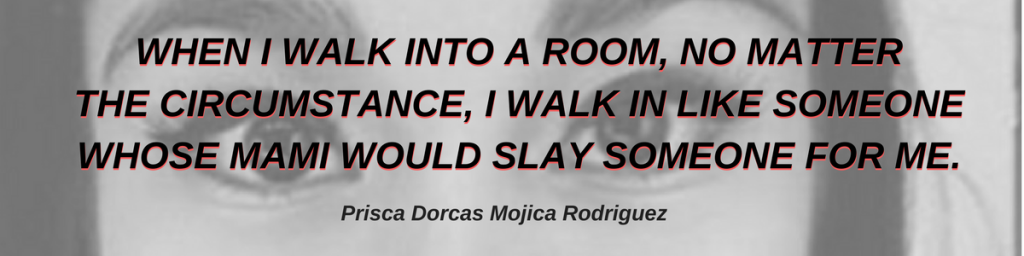
We would have fought for you fiercely. I never knew that you could love someone before you even met them and then I remember finding out I was pregnant and feeling immense love for you. A love I couldn’t describe and a love that could not be compared to anything else. I would have done anything for you and you would have known that about me, just like I know that about my mami. When I walk into a room, no matter the circumstance, I walk in like someone whose mami would slay someone for me.
You would have been so brave, braver than YOUR mami. But most of all, you would have been you. Whatever you decided, whatever you did, you would have been you and that would have been enough.
I would have been honored to call myself your mami.
To the child I will never birth, today I remember you.
Prisca Dorcas Mojica Rodriguez , Contributing Writer & Founder, Latina Rebels
Grace Hopper is canceled. Here's what Latinas in tech can do, and the communities still worth your time.

For the first time in 37 years, every Goldman Environmental Prize winner is a woman. A Latina is among them.

One holds a Guinness World Record. One retired undefeated and undisputed. Three more are fighting their way to Los Angeles. Five Latina boxers, and where each of them stands in 2026.

In this installment of BoldLatina’s Community Essay series, author, award-winning filmmaker, and keynote speaker Denise Soler Cox whom we previously interviewed about language and Latino cultural identity in “Being Latino Enough” reflects on the rape case that has shaken the nation.
Get weekly inspiration for living well delivered straight to your inbox.